
You know the feeling. It’s the middle of a sweltering summer afternoon, you hear the familiar hum and feel the airflow from your vents, but the air is just… warm. Or maybe it’s slightly cool, but your house feels like a sauna anyway. Your AC is clearly “on” and “working” in the sense that it’s making noise and moving air, but it’s utterly failing at its one job: cooling.
Take a deep breath. I’ve been there, both as a frustrated homeowner and from talking to countless HVAC technicians over the years. This is one of the most common – and most distressing – air conditioning problems. The good news? It’s often something you can diagnose, and sometimes even fix, yourself. The bad news? If you ignore it, you could be facing a much more expensive repair or even a full system replacement.
In this guide, I’m going to walk you through every possible reason your AC is blowing air but not cooling, starting with the simplest, most DIY-friendly checks and moving into the complex, “call-a-pro” territory. I’ll explain things in plain English, share a few stories from my own misadventures with home HVAC, and give you the knowledge you need to talk confidently with a technician if you need one. Let’s roll up our sleeves and solve this.
Understanding the Very Basics: How Your AC Should Work
Before we dive into what’s broken, let’s quickly cover how it’s supposed to work. You don’t need an engineering degree, but a 30,000-foot view makes troubleshooting way easier.
Think of your air conditioner as a two-part system:
-
The Indoor Unit (Evaporator Coil & Air Handler/Furnace): Located inside, typically in a closet, attic, or basement. This contains a cold coil (the evaporator) and a fan. Warm air from your house is sucked over this cold coil. As it passes over, the refrigerant inside the coil absorbs the heat from the air, cooling it down. The now-cooled air is blown back into your home through the ducts. The moisture from the warm air condenses on the cold coil and drains away (that’s where the water comes from).
-
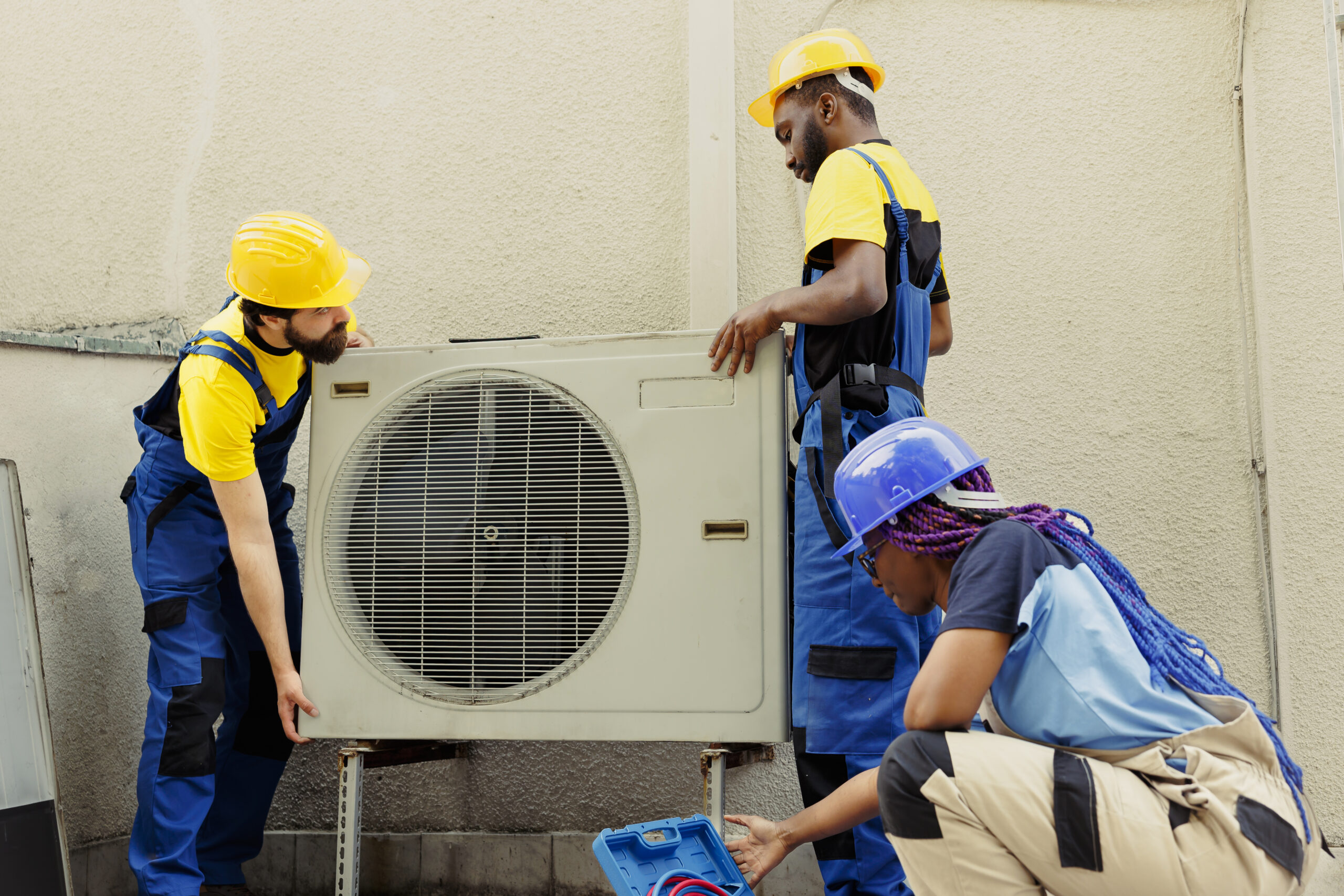
The Outdoor Unit (Condenser Unit): That big metal box with a fan outside your house. It contains the compressor (the heart of the system) and another coil (the condenser). The refrigerant, now carrying the heat absorbed from your house, travels outside. The compressor pressurizes it, and the outdoor fan blows air across the condenser coil, releasing the heat into the outside air. The refrigerant, now cooled and returned to a liquid state, cycles back inside to start over.
The Magic Cycle: Refrigerant absorbs heat indoors → travels outside → releases heat → returns inside. Repeat. Any break in this cycle means no cooling.
When you say “my AC is working but not cooling,” you usually mean the fans are running (indoor and/or outdoor), but the refrigerant cycle is broken or impaired. Let’s find out where.
Level 1: The “Quick Fix” Checklist (Do This First!)
These are the simplest, most common, and often overlooked issues. Always start here. You’d be amazed how often the solution is on this list. I once paid a $100 service call fee only to be embarrassed when the tech pointed at my dirty filter in 10 seconds flat.
1. The Thermostat: Is It Actually Telling the AC to Cool?
This sounds silly, but it happens all the time. Your thermostat is the brain; if it’s confused, the body (the AC) won’t act right.
-
Check the Setting: Is it set to “COOL” and not “HEAT” or “FAN ON”? In “FAN ON” mode, only the indoor blower runs, circulating air without cooling it.
-
Check the Temperature: Is the set temperature lower than the current room temperature? If it’s set to 78°F and the room is 77°F, the AC won’t kick on the cooling cycle.
-
Try a Reset: Sometimes, like any computer, thermostats glitch. Gently remove the thermostat from its wall plate (if it’s digital) and reinstall it, or turn the whole system off at the thermostat and at the circuit breaker for 60 seconds, then turn it back on.
2. The Air Filter: The Silent Killer of Cooling
This is public enemy number one. A clogged air filter restricts airflow across the indoor evaporator coil.
-
What Happens: The coil gets too cold (because not enough warm air is passing over it) and can actually freeze into a block of ice. An iced-over coil cannot absorb any more heat. You’ll get little to no cool air, and may even hear gurgling or see water leaks.
-
The Fix: Locate your air filter. It’s usually in the return air grille on a wall/ceiling, or in the indoor unit itself. Hold it up to the light. Can you see light through it? If not, it’s time to replace it. Do this every 1-3 months during peak cooling season. This isn’t just for cooling; it’s for your health and your system’s lifespan.
3. The Outdoor Unit: Is It Being Suffocated?
Your outdoor condenser unit needs to breathe. It rejects heat by pulling in air through its sides and blowing it out the top. If it’s blocked, it can’t dump heat, and the whole system shuts down or overheats.
-
Clear the Area: You need at least 2-3 feet of clear space on all sides. Go outside right now and look. Are there overgrown weeds, shrubs, vines, or piles of leaves crowding it? Is it clogged with grass clippings, cottonwood fluff, or dirt? Clear it all away gently with your hands or a garden hose (on a gentle spray, never a pressure washer which can bend the delicate fins).
-
Clean the Fins: The thin aluminum fins around the unit are the coil. If they’re bent or packed with dirt, airflow is choked. You can buy a cheap “fin comb” at a hardware store to straighten bent fins. For dirt, a gentle hose down from the inside out (after turning the power off!) can work wonders.
Level 2: The “Visual Inspection” Issues
If the quick fixes didn’t solve it, it’s time to look a little closer. Power off your system at the thermostat and the circuit breaker before poking around.
1. The Frozen Evaporator Coil
As mentioned, a dirty filter or low airflow can cause this. But how do you know?
-
The Signs: Little or no airflow from vents. You might see ice on the copper refrigerant lines (the big, insulated pipe) leading into your indoor unit. You may hear a hissing or gurgling sound. You might have water leaking from the indoor unit or a clogged drain pan.
-
The Immediate Fix: TURN THE AC OFF. Switch the thermostat to “FAN ONLY” or “OFF.” Let the fan run to help melt the ice. This can take several hours (3-24). Do NOT try to chip the ice off. Address the root cause: replace the filter, check for closed vents, and once completely thawed, you can try turning the cooling back on. If it freezes again immediately, you have a deeper issue (like low refrigerant).
2. The Blocked Condensate Drain Line
Your AC removes humidity, and that water has to go somewhere. A PVC pipe leads from the indoor unit to a drain. This line can get clogged with algae, sludge, or mold.
-
The Signs: Water leaking around the indoor unit (often in the attic, leading to ceiling stains). Many modern systems have a safety switch (a float switch) that shuts off the AC if the drain pan fills up to prevent flooding. So, a clogged drain can literally turn your compressor off.
-
A Simple DIY Try: Find the drain line’s termination. It’s often by an exterior wall, in a utility sink, or near a floor drain. You can try using a wet/dry vacuum to suck the clog out. Seal the vacuum hose around the end of the drain line outside and run it for a minute. You can also pour a cup of distilled white vinegar or a specialized HVAC drain line cleaner down the access port at the indoor unit to kill algae (do this monthly for maintenance).
Personal Story: Last summer, my AC stopped cooling and I heard a sloshing sound in the closet with the air handler. The drain pan was full. A $5 bottle of drain line tablets from the hardware store and 15 minutes with the wet vac cleared a nasty green algae plug. The AC kicked right back on. Such a simple fix for such a worrying problem.
3. Tripped Circuit Breaker or Blown Fuse
The outdoor unit has its own dedicated circuit breaker, usually a double-pole 240V one. The indoor unit (blower) may also have one.
-
The Check: Go to your main electrical panel. Look for a breaker that’s in the “tripped” position (not fully ON or OFF). Flip it all the way OFF, then back ON firmly. If it trips again immediately when the AC starts, stop. You have an electrical fault (like a bad capacitor or compressor) and need a pro.
Level 3: The “Mechanical & Refrigerant” Problems (Call a Pro Territory)
If you’ve checked everything above and your AC is still blowing warm air, we’re likely dealing with a component failure or a refrigerant issue. This is where your toolbox should consist mainly of a phone to call a qualified HVAC technician. Diagnosing and fixing these requires specialized tools, licenses (for refrigerant), and expertise.
1. Low Refrigerant Charge (A Leak)
Refrigerant is the lifeblood of the system. It doesn’t get “used up.” If it’s low, there’s a leak.
-
Why It Stops Cooling: Not enough refrigerant means it can’t absorb enough heat from your home. The system will struggle, often leading to a frozen evaporator coil (even with a clean filter) and an overworking compressor.
-
The Signs: Hissing or bubbling noises (from the leak), frozen coils, warm air from vents, sky-high electricity bills, and the system constantly running without reaching the set temperature.
-
The Fix: A technician must find and repair the leak, then recharge the system to the exact specification. Never just “add a little Freon.” That’s illegal, bad for the environment, and merely treats a symptom while the leak worsens.
2. The Failed Capacitor: The Most Common Component Failure
Capacitors are like powerful batteries that give the compressor and fans the extra jolt of electricity they need to start. They weaken and fail over time, especially in heat.
-
The Signs: The outdoor unit hums but the fan doesn’t spin (or spins slowly). Or, you hear a loud “click” or “hum” from outside and nothing happens. Sometimes, the fan runs but the compressor won’t start. A bad capacitor puts immense strain on the motors and can lead to their failure.
-
The Fix: A technician can test capacitors with a meter and replace them. It’s a relatively quick and inexpensive repair. WARNING: Capacitors hold a deadly electrical charge even when power is off. This is not a DIY repair unless you are highly trained.
3. The Faulty Compressor
The compressor is the heart of the system, pumping refrigerant. If it fails, the AC is essentially dead.
-
The Signs: The outdoor unit fan runs, but the compressor is silent (you’ll hear no deep hum or vibration). Or, it makes loud, alarming noises (clunking, grinding, screeching). It may trip the breaker repeatedly.
-
The Fix: Compressor replacement is a major, expensive repair. Often, if the compressor is dead and the unit is over 10-15 years old, technicians will recommend replacing the entire outdoor unit (and often the indoor coil) for efficiency, warranty, and compatibility reasons.
4. The Faulty Contactor
This is an electrical relay switch in the outdoor unit that turns the compressor and fan on/off. It sees millions of cycles and can weld shut or burn out.
-
The Signs: The outdoor unit runs constantly, even when the thermostat is off. Or, it won’t turn on at all. You might see pitting or black charring on the contactor points.
-
The Fix: Another relatively straightforward part replacement for a technician.
5. Leaky or Blocked Refrigerant Lines
The copper lines that carry refrigerant can develop tiny leaks at joints. Less commonly, they can become restricted or kinked, blocking flow.
-
The Signs: Similar to low refrigerant: poor cooling, ice, high bills. A technician will use leak detectors, gauges, and thermal cameras to diagnose.
When to Absolutely, Positively Call a Professional HVAC Technician
Knowing when to wave the white flag is a sign of a smart homeowner. Call a pro if:
-
You hear loud, strange noises (grinding, screeching, banging) from either unit.
-
You see smoke, burning smells, or sparks.
-
The circuit breaker trips repeatedly.
-
You suspect a refrigerant leak (hissing, ice, poor performance).
-
You see oil stains or residue on the refrigerant lines or components (oil often leaks out with refrigerant).
-
You’ve done all Level 1 & 2 checks and the problem persists.
-
You are simply uncomfortable poking around electrical or mechanical components.
Choosing a Good Tech: Look for licensed, insured, NATE-certified technicians. Ask for references. A good tech will perform a full system check, not just the symptom you describe, and will clearly explain their findings and options.
Conclusion: Patience, Process, and Prevention
Dealing with an AC that’s not cooling is stressful, especially during a heatwave. But as we’ve walked through, the solution often follows a logical path: Start simple, rule out the obvious, and work your way toward the complex.
My biggest piece of advice? Don’t ignore maintenance. That annual pre-season tune-up (which costs about as much as a nice dinner out) is the best insurance policy you can buy. A technician will clean the coils, check refrigerant levels, inspect electrical components, and ensure everything is running efficiently. It can catch a weak capacitor or a tiny refrigerant leak before they leave you sweating on a Saturday night.
Remember, your air conditioner is a powerful machine working in a harsh environment (heat, rain, dirt). It needs a little care. Start with that filter, clear those weeds, and listen to what it’s telling you. Most of the time, the fix is within reach. And when it’s not, you’ll now have the knowledge to understand what’s happening and communicate effectively with the professional who comes to save the day—and your summer.
Stay cool out there!
FAQ: AC Not Cooling – Quick Answers
Q: My AC is running constantly but not cooling the house. What’s wrong?
A: This is a classic sign of a system that’s struggling. The most common culprits are a dirty air filter, low refrigerant due to a leak, or a unit that is too small for the space it’s trying to cool. Start with the filter and outdoor unit clearance, then call a pro to check refrigerant levels.
Q: Why is my outdoor unit fan not spinning?
A: The two most likely causes are a failed capacitor (giving the fan motor no starting jolt) or a failed fan motor itself. A stuck blade or debris can also cause this. Turn the power off and check for obstructions. If clear, it’s a job for a technician.
Q: I see ice on my AC lines or indoor unit. Is that bad?
A: Yes. Ice is a symptom, not a cause. It means your evaporator coil is getting too cold, almost always due to low airflow (dirty filter, closed vents, bad blower motor) or low refrigerant. Turn the system off, let it thaw completely, change the filter, and see if it happens again. If it does, you have a refrigerant issue.
Q: How often should I replace my air filter?
A: The standard recommendation is every 90 days. However, if you have pets, allergies, or run your system constantly, change it every 30-60 days. A clean filter is the single easiest way to protect your AC and keep it cooling efficiently.
Q: Can I just add refrigerant (“Freon”) myself?
A: No. It is illegal for non-licensed individuals to purchase or handle refrigerant (EPA Section 608). More importantly, refrigerant must be matched to the exact type and amount specified by your system’s manufacturer. “Topping off” without fixing the leak is wasteful, harmful, and will lead to the same problem very soon. This is critical, professional work.
Q: How long should an air conditioner last?
A: With proper maintenance, a typical central AC unit lasts 12-15 years. After this point, major components like the compressor become more prone to failure, and efficiency drops significantly compared to new models.
